Piccolo Caso in St. Petersburg
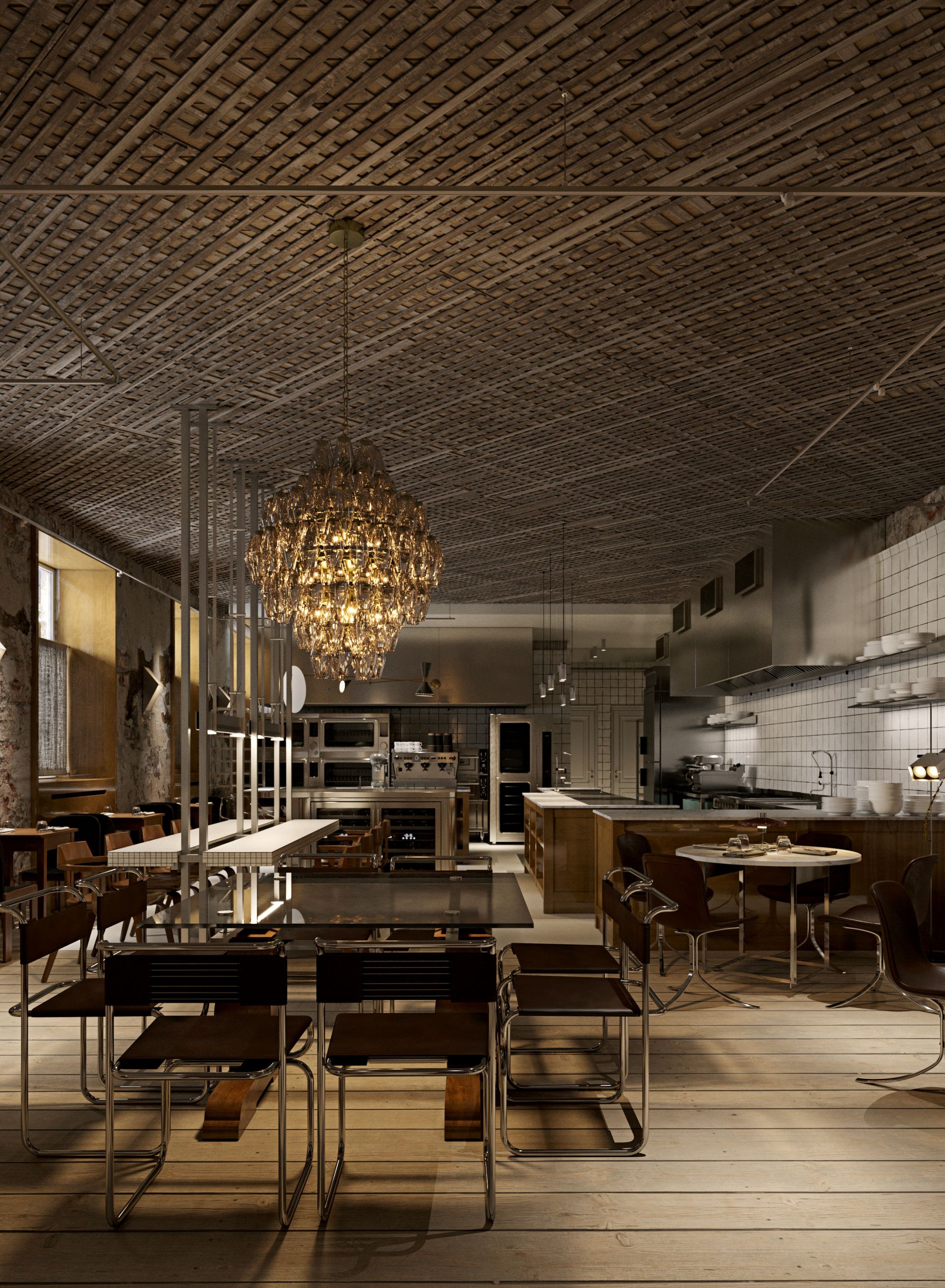
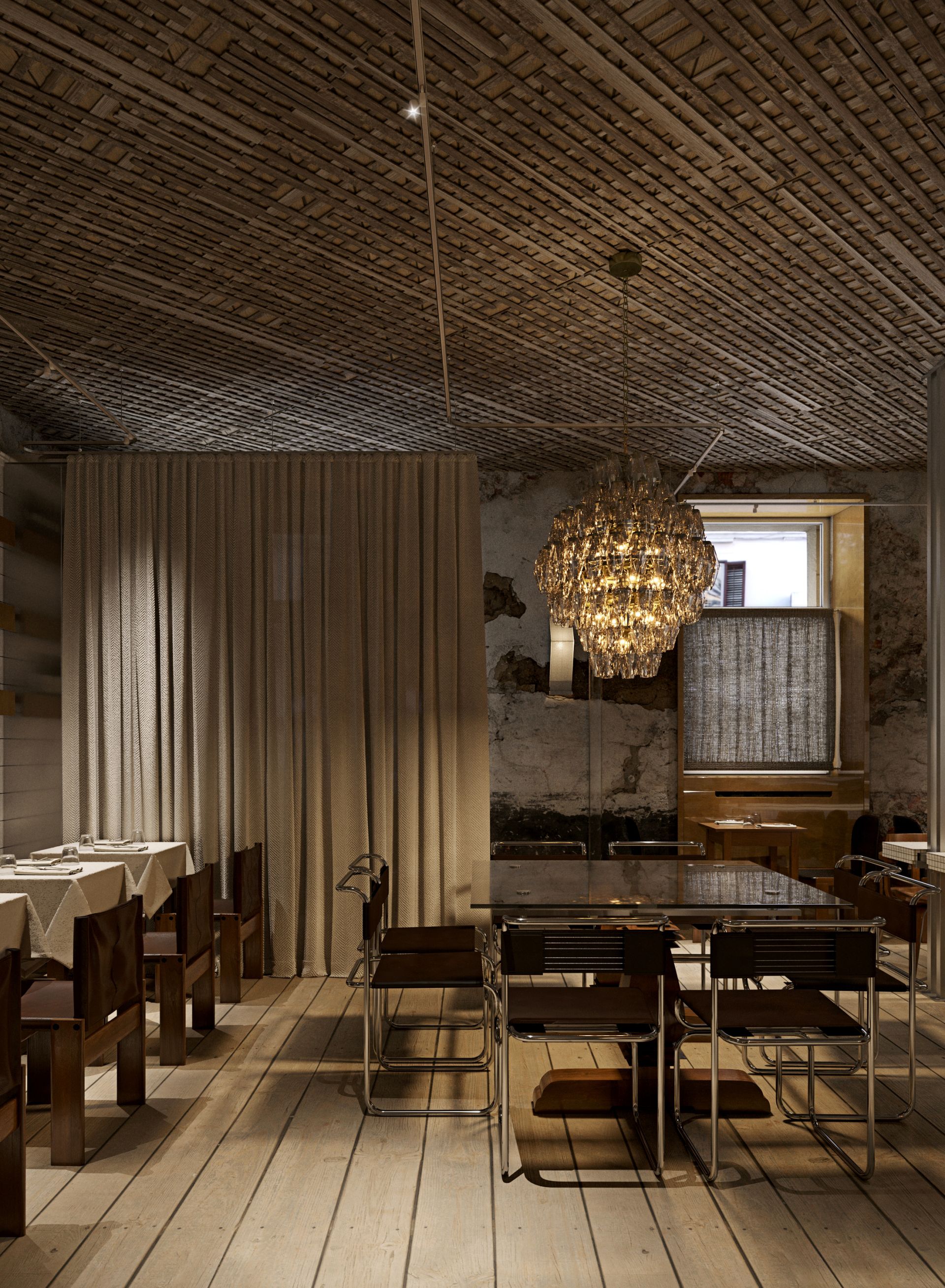
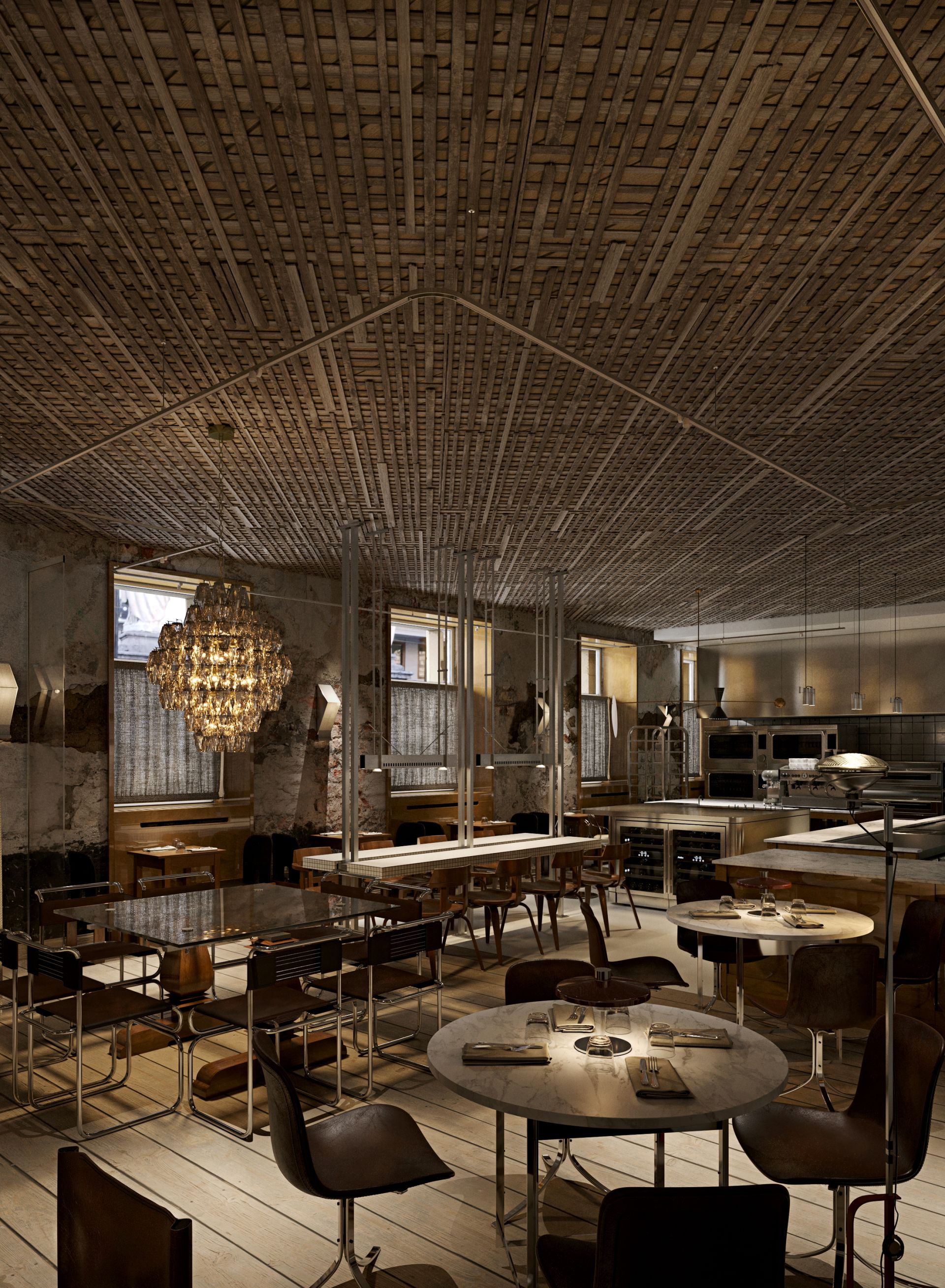
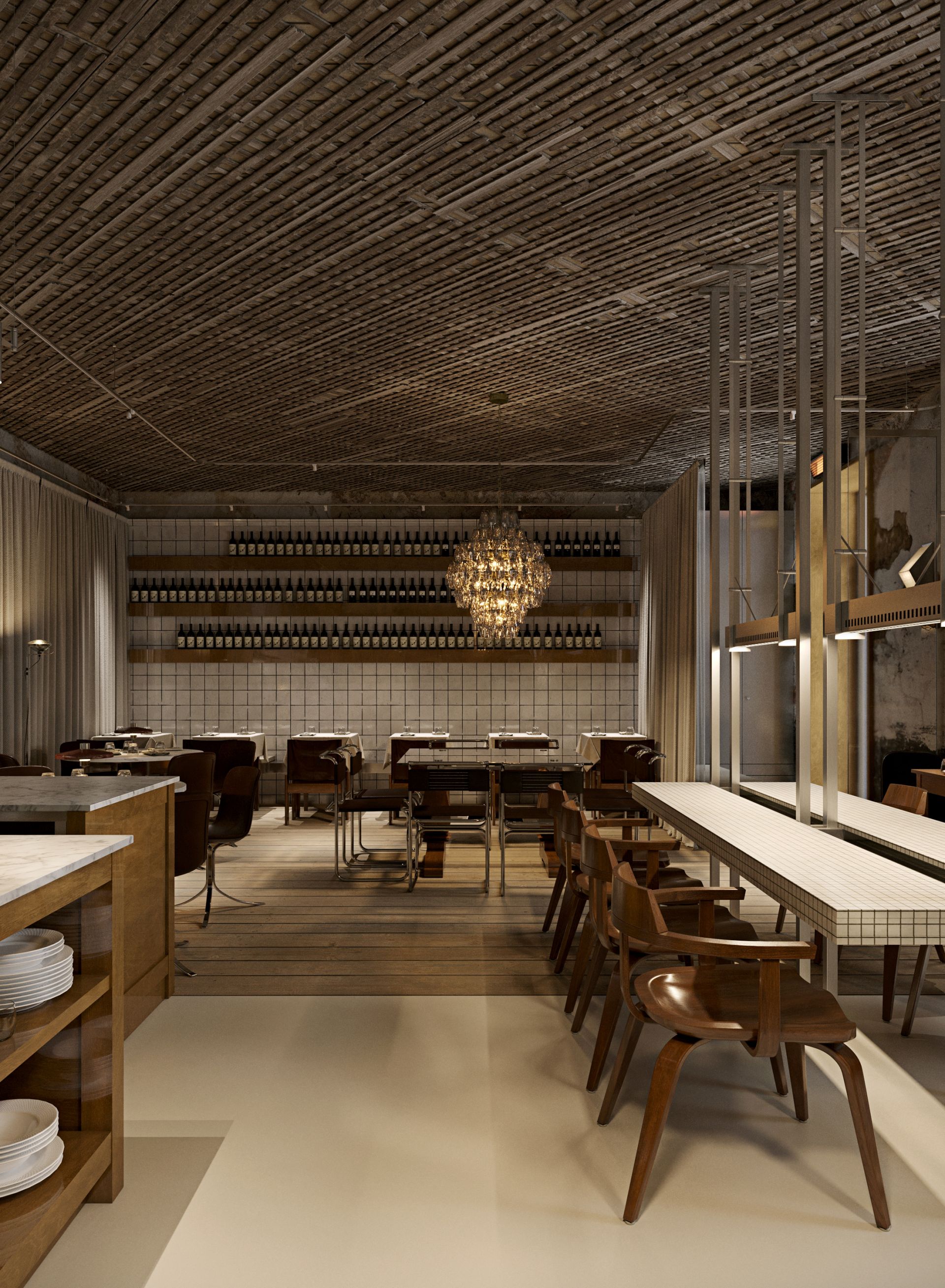
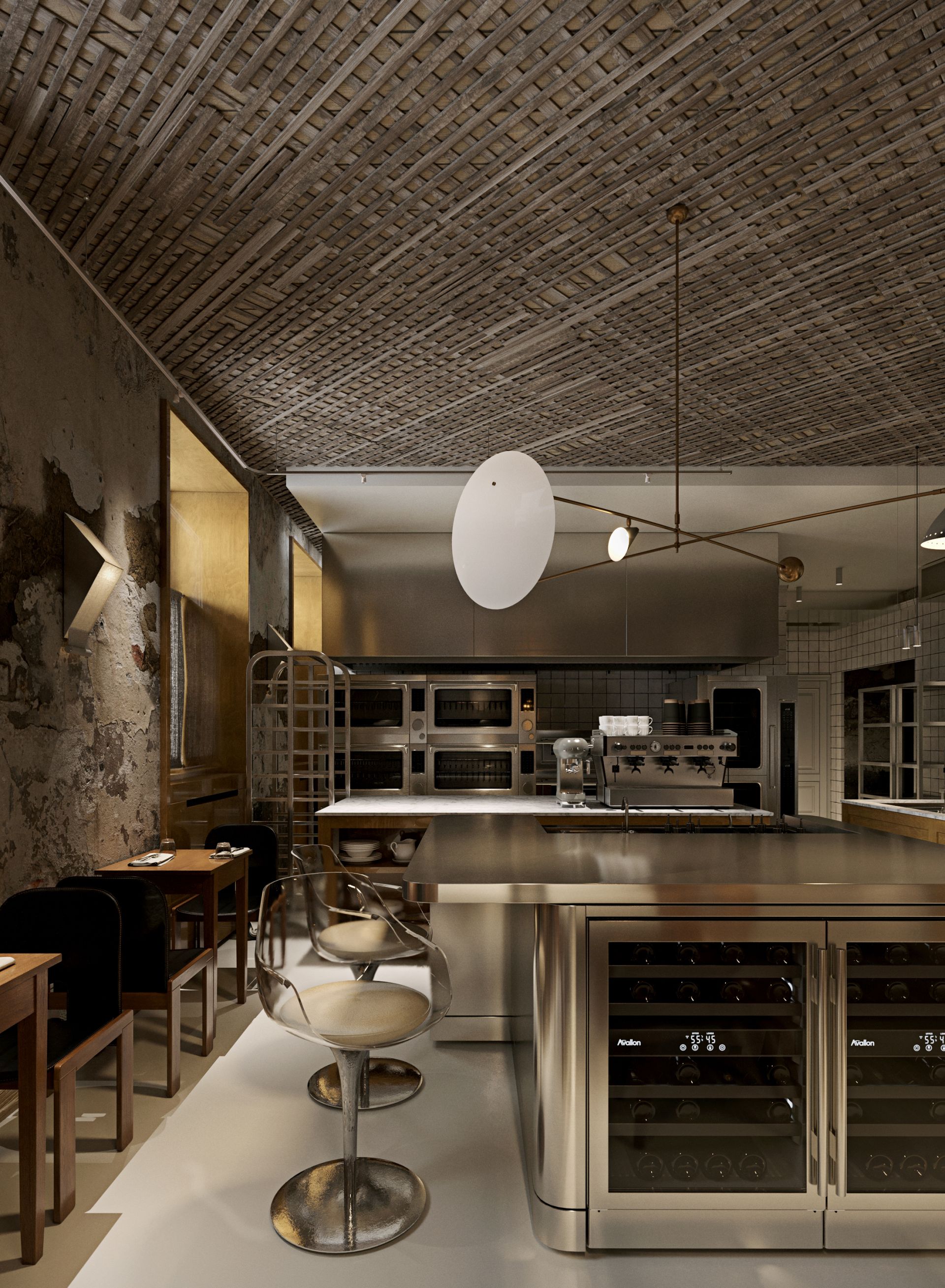
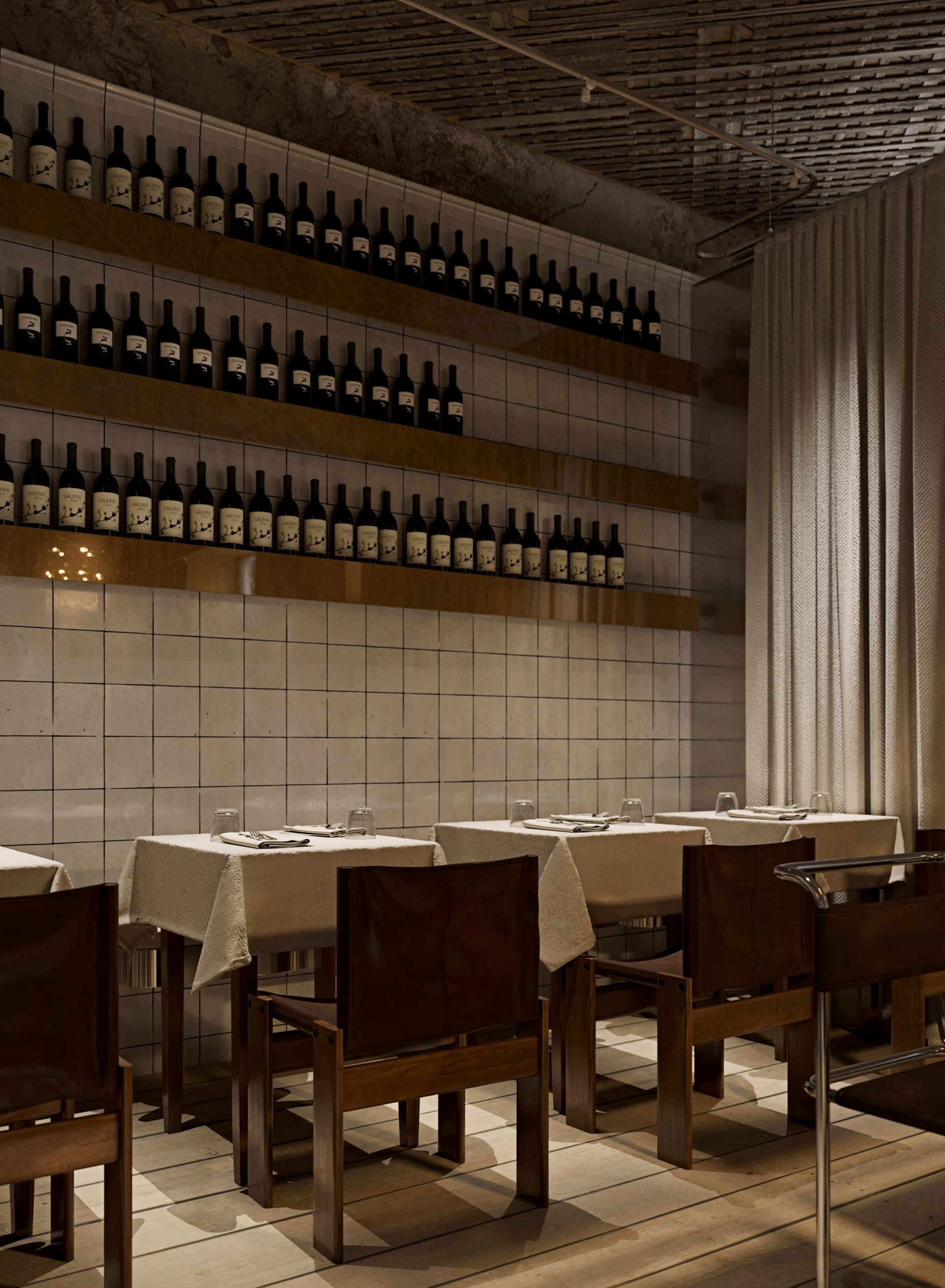
The space of Piccolo Caso is a dialogue of eras and materials, assembled with museum-like precision and a collector's boldness. A single hall, both representative and intimate, unfolds as a laconic yet detail-rich stage. Walls of light tiles with dark grout and minimally processed stone set a neutral, almost canvas-like backdrop for the true stars—exclusive vintage furniture.
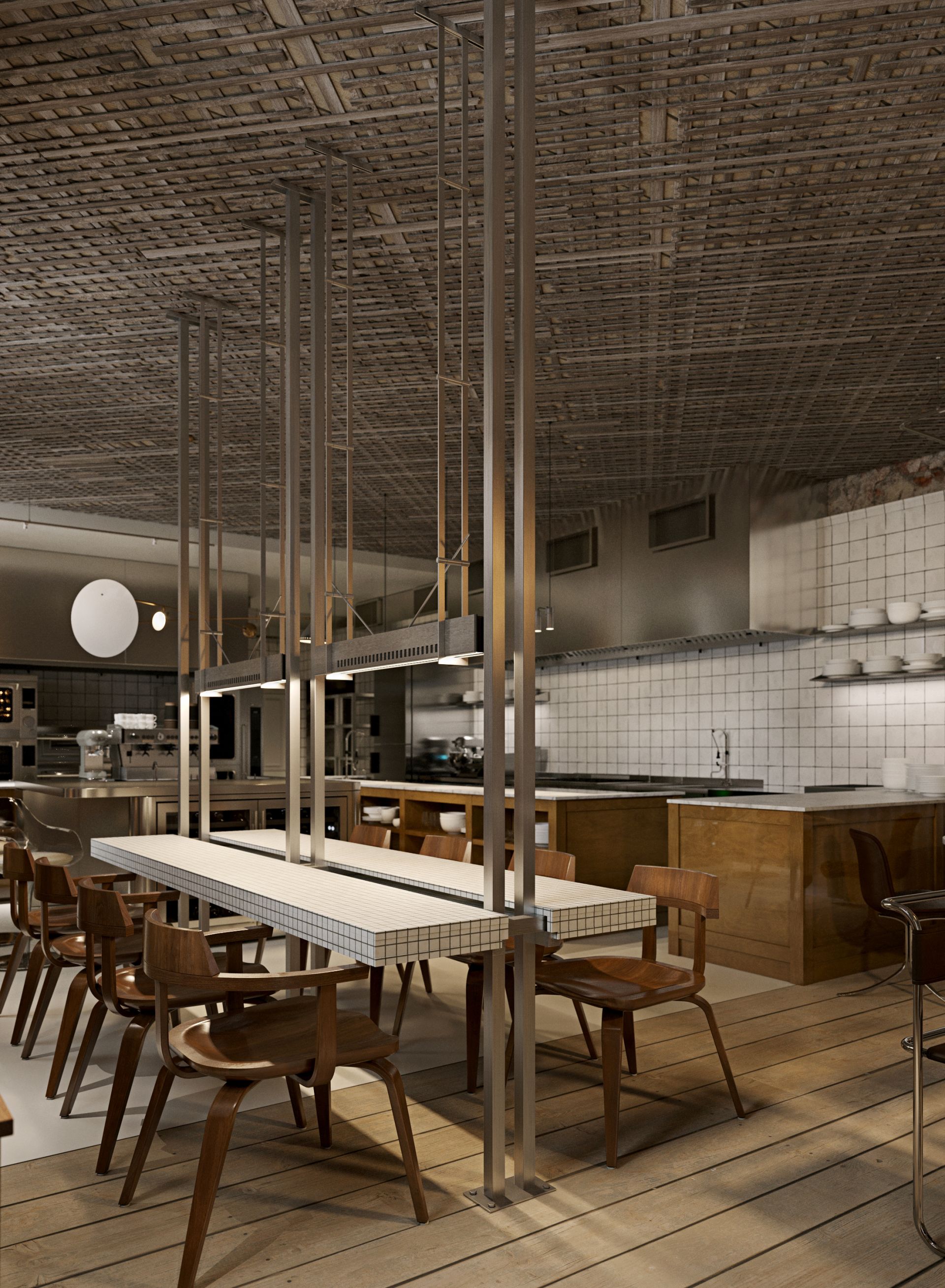
Each seating area tells its own story. At the bar island, where signature cocktails are born, you will find the transparent ghosts of the 1960s—the 'Champagne' chairs by Estelle & Erwin Laverne. Against the wall, the austere elegance of Afra & Tobia Scarpa's 'Monk' chairs in noble leather. For group tables, the iconic curved Walter Gropius Thonet chairs reign, while the round tables are accompanied by the ascetic 'PK 9' chairs by Poul Kjærholm. In this visual polyphony, there is no dissonance: the brown-gray palette of warm wooden floors, glossy lacquers, and leather, accentuated by white, creates a remarkably cohesive and cozy atmosphere. Hovering above it all is a wooden ceiling—an unexpected and warming element. The contrasts are completed by a play of textures: rough stone, warm wood, the cold metal of the banquettes along the walls, and glossy details reflecting the light.
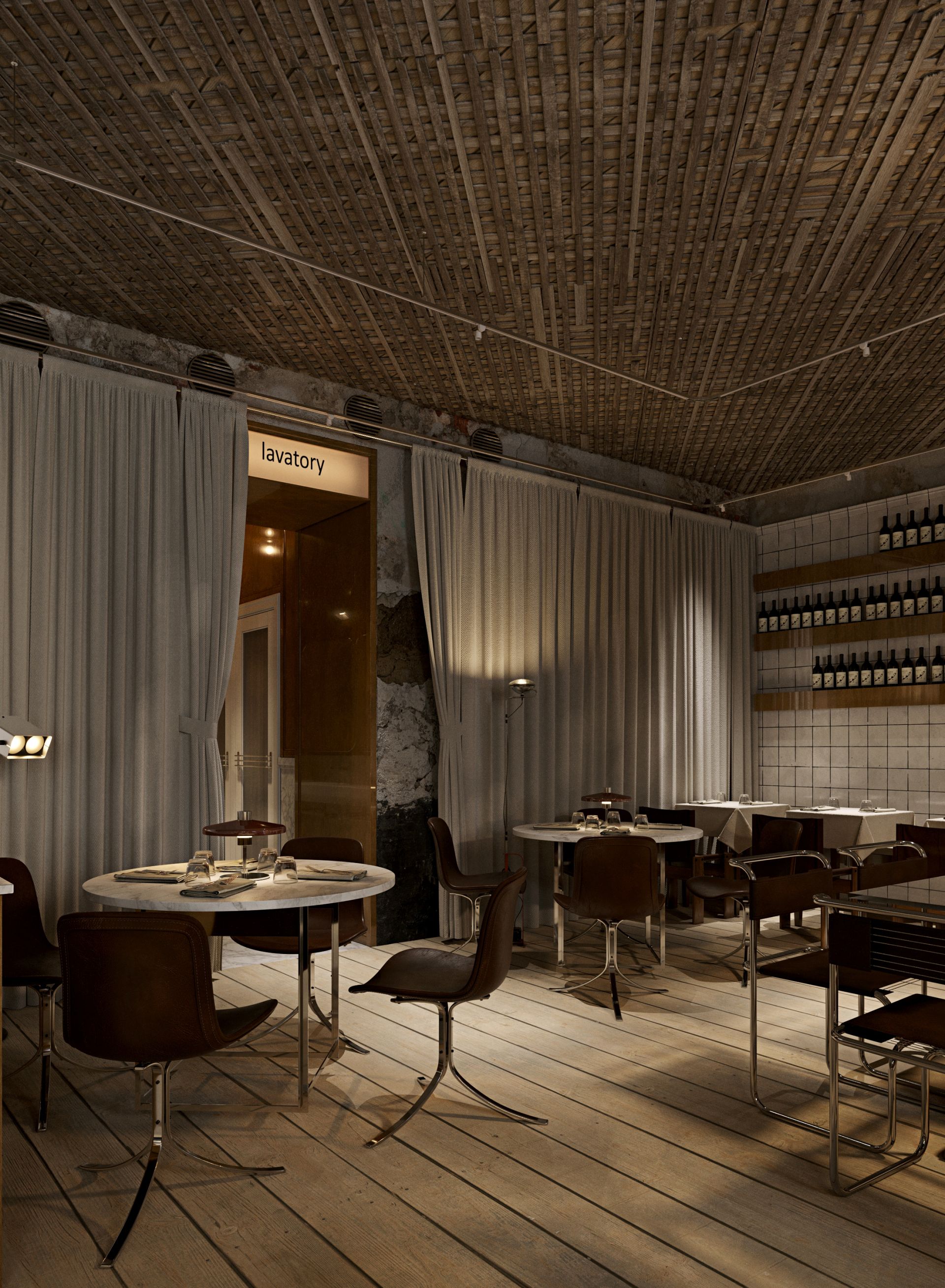
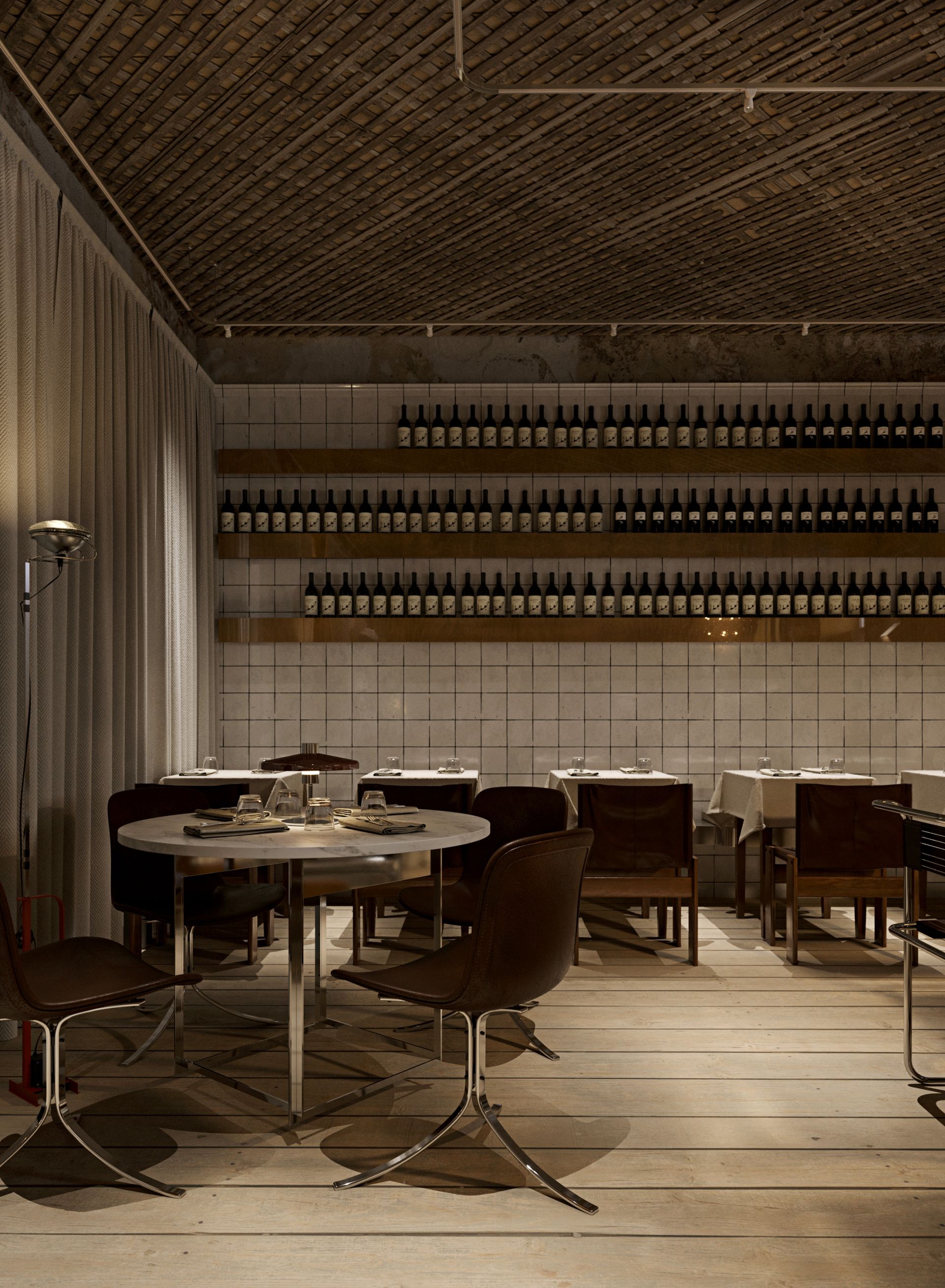
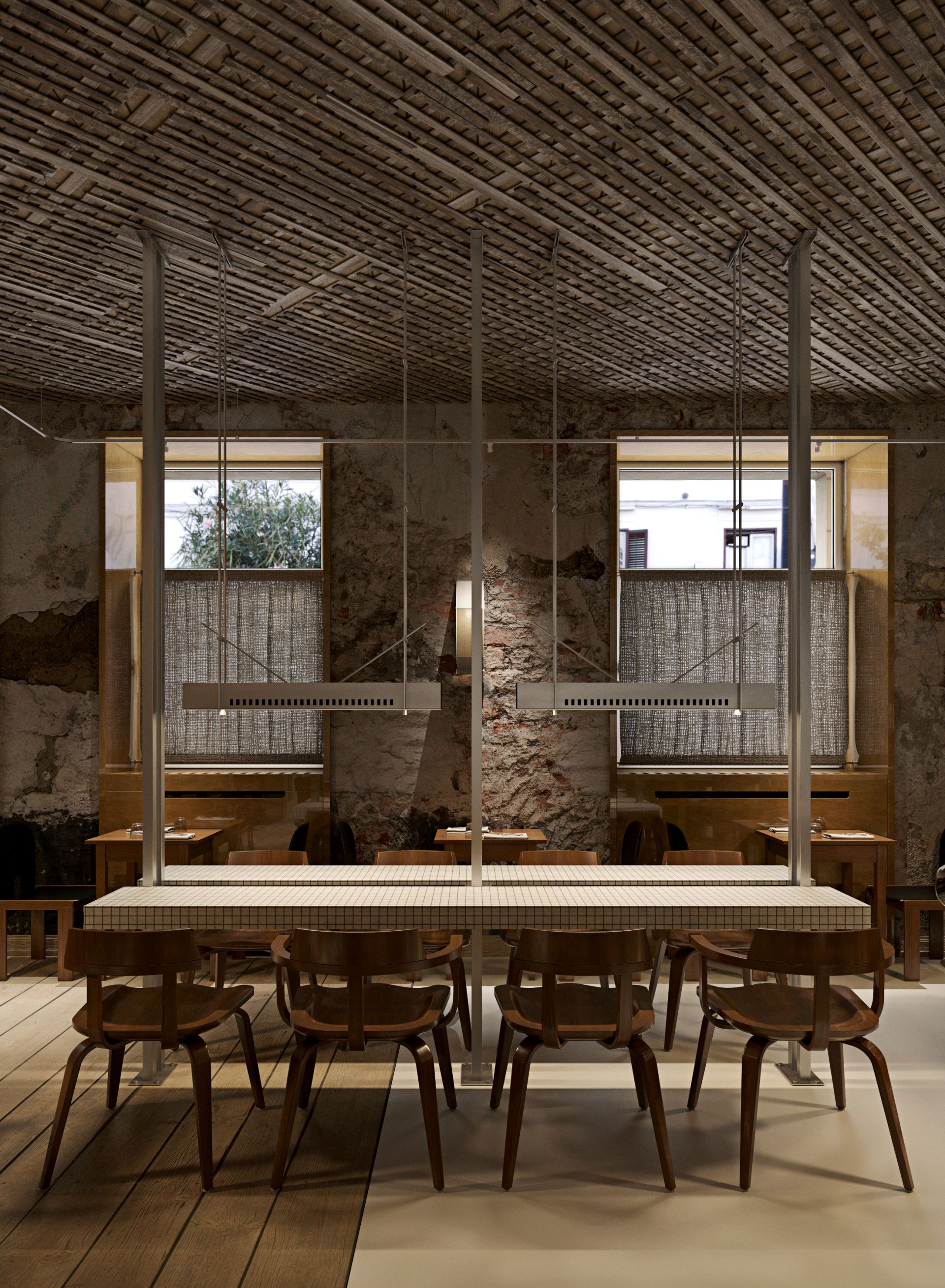
The lighting is an art form in itself. Deliberately simple industrial floor lamps with directional light, understated sconces by Pedro Avila by the windows, elegant Jacques Biny fixtures… But the main chord, both conceptual and visual centerpiece, is the Carlo Scarpa "Poliedri" chandelier by Venini. This sculpture of Murano glass, scattering into geometric shards of light, becomes the philosophical heart of the project, a symbol of that very "accidental perfection."
Behind the heavy, solid-color curtain concealing the restrooms and the window drapery, which fosters a sense of intimacy and an exclusive club atmosphere, life unfolds. The open kitchen and bar are not just functional areas but part of the performance, where the pure flavors of Italy are crafted on snow-white tableware.
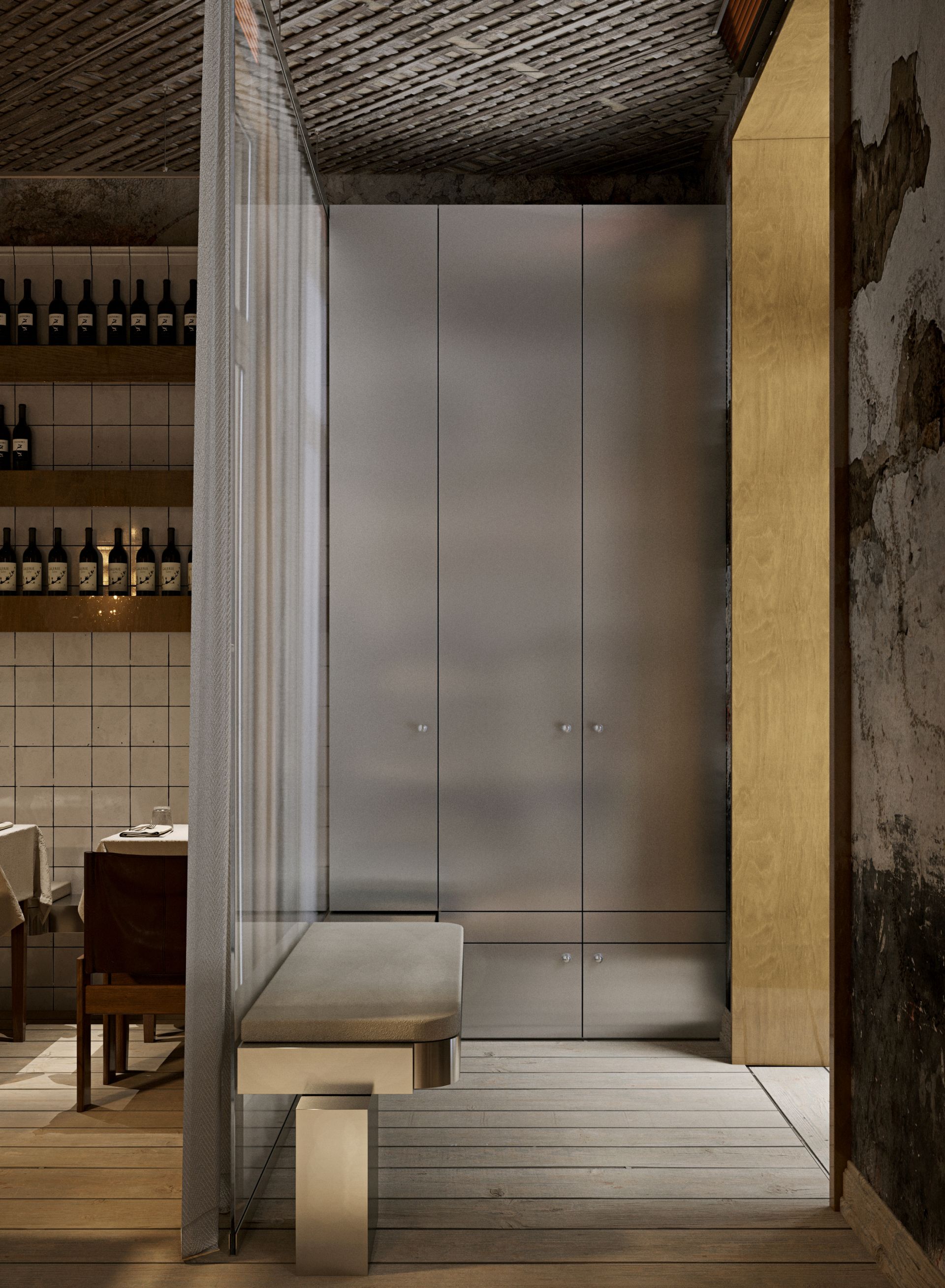
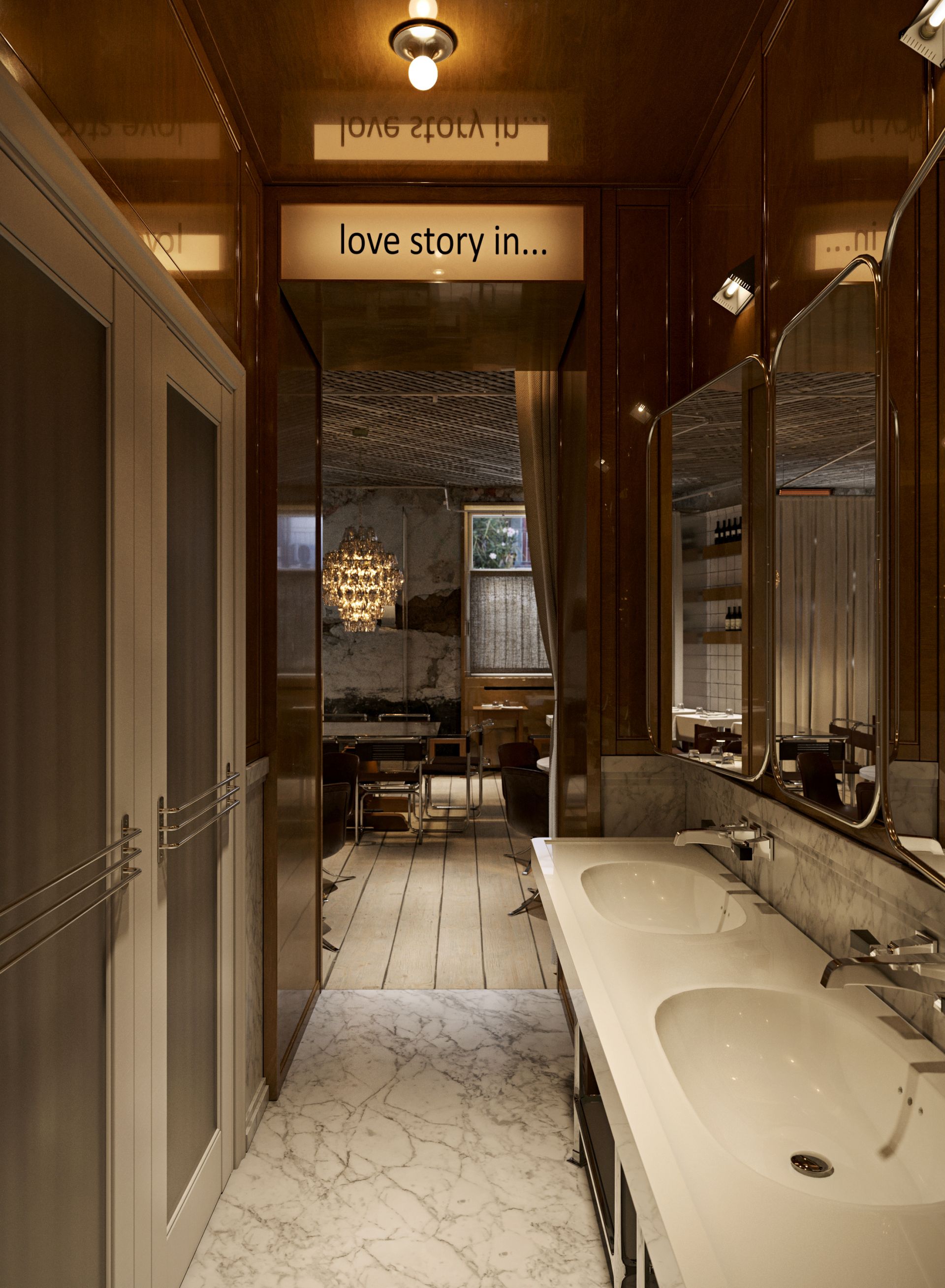
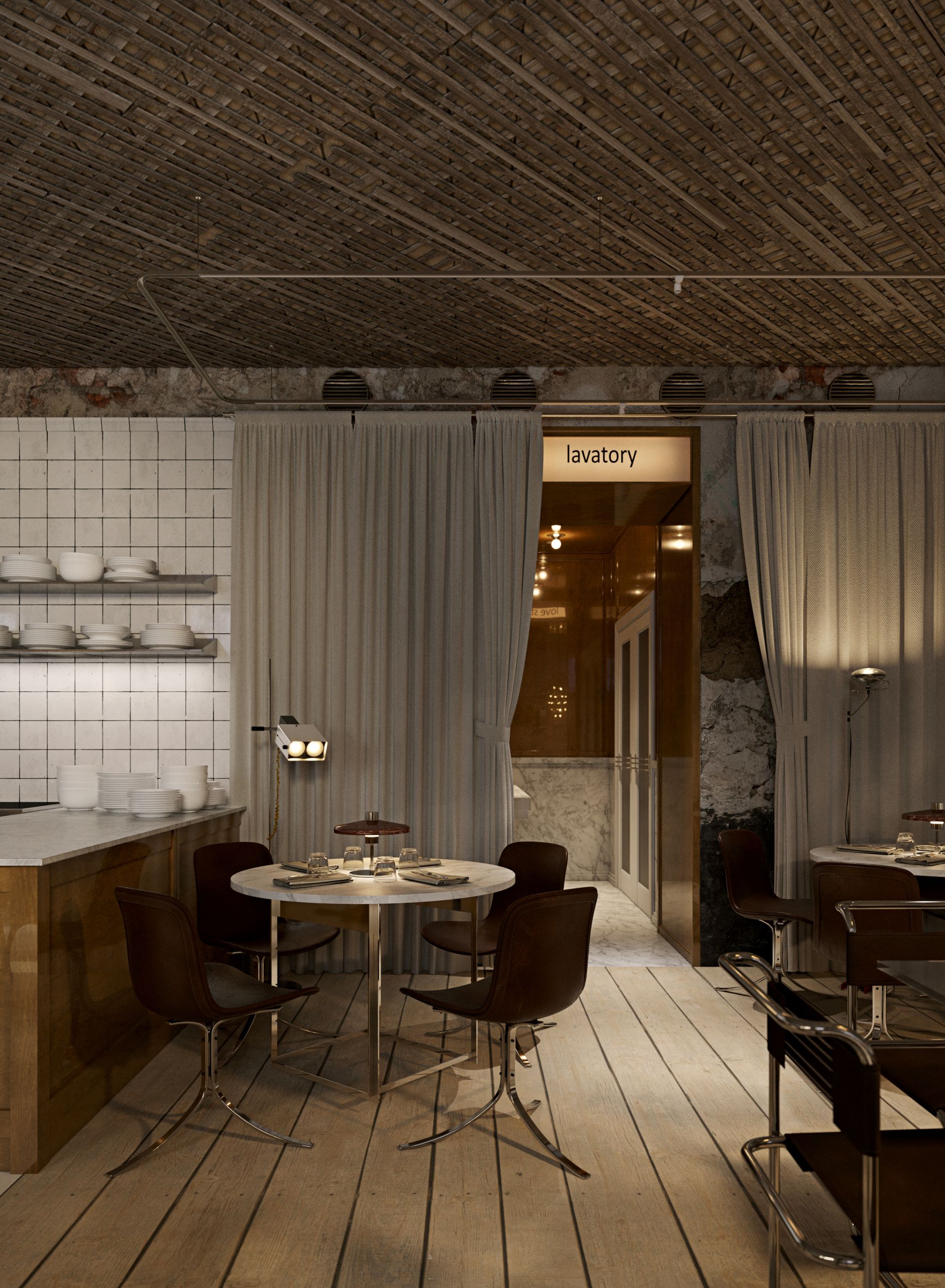
Passing through a heavy, solid-color curtain from the main hall, guests enter a space governed by strict order and tangible harmony. Walls clad in white stone to waist height and a stone floor create a cool, pristine foundation. This contrasts with the warmth of lacquered wood on the upper walls and ceiling, softening the geometry and adding intimacy.
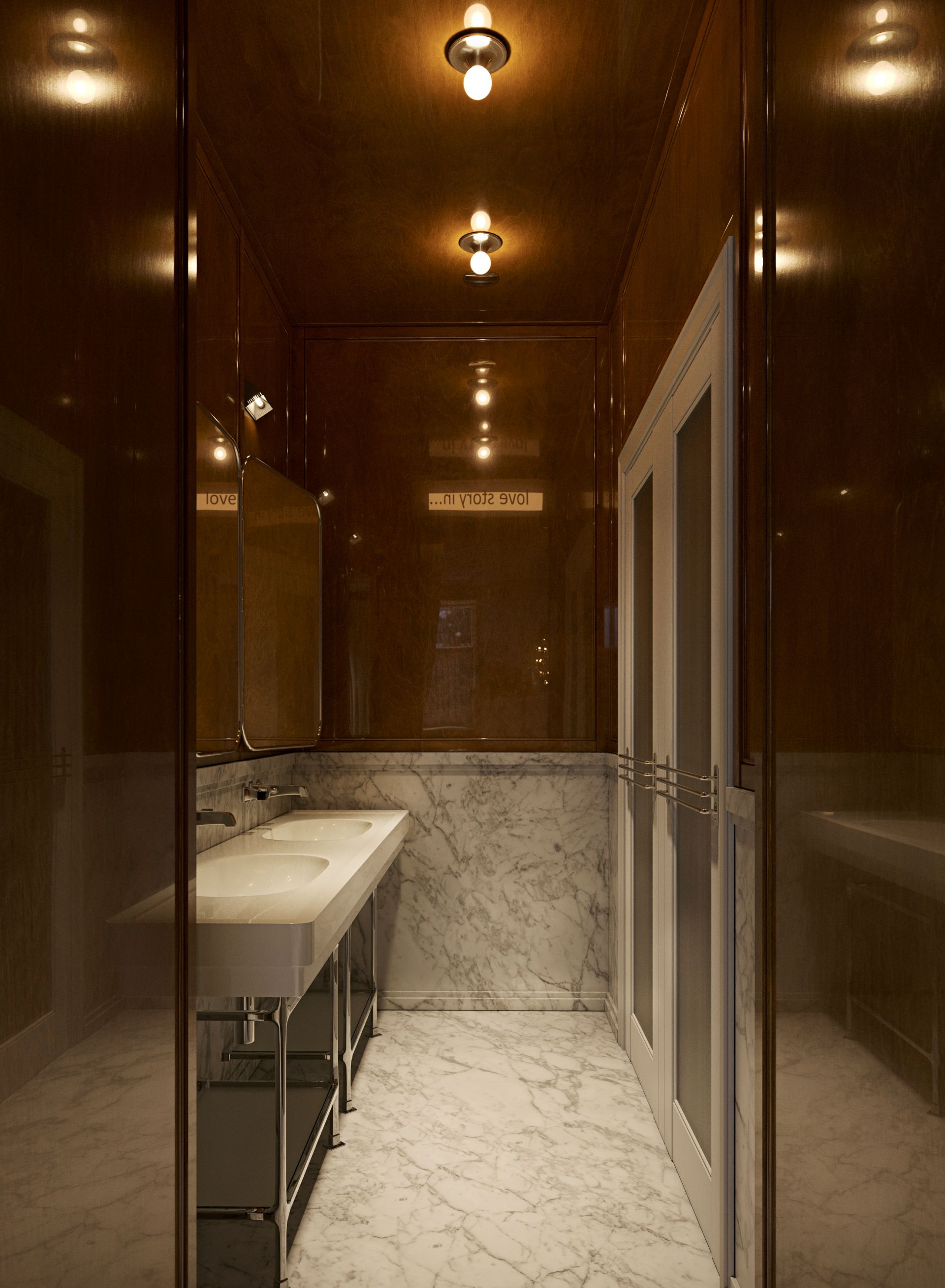
The focal point of this area becomes the open metal stands with white sinks, whose industrial frankness reads as a bold artistic gesture. Above a large trifold mirror in strict metal frames, sconces are mounted—those very vintage Jacques Biny fixtures from the 50s, designed by Charlotte Perriand. Their laconic forms and directional light emphasize the texture of the materials, transforming a utilitarian act into a moment of contemplation.
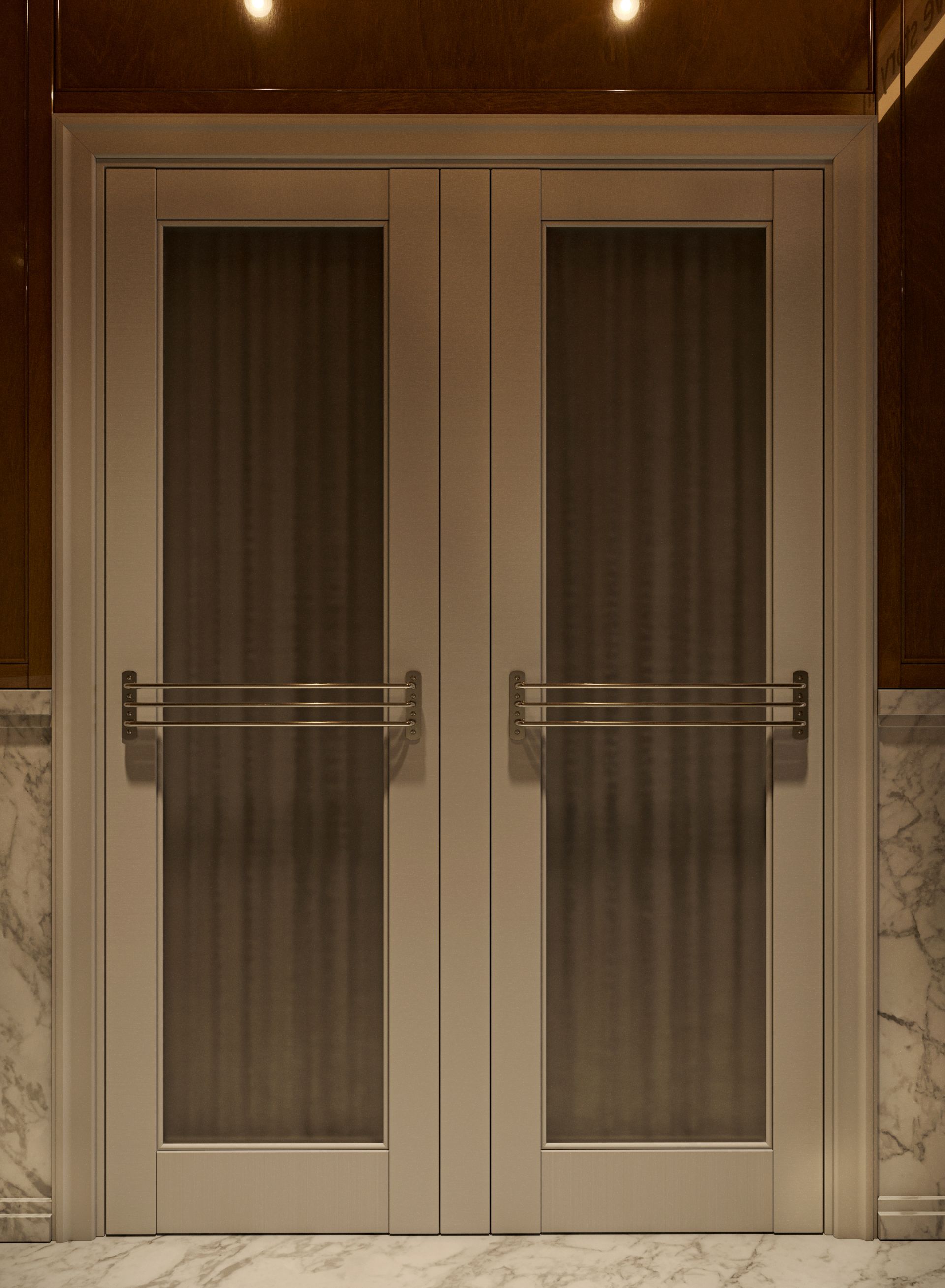
The illusion of a single, almost monumental entrance is created by a double-leaf door leading to separate toilet cubicles. This architectural technique, concealing two functions behind one facade, is another example of the meticulous play with perception and intelligent space organization, where every detail, even hidden, is thought out to the smallest degree. There is nothing superfluous here—only a balance of materials, light, and impeccable purity of line.